
Agreement Drafting and Legal Agreement Services in Chennai

A business agreement usually starts with a simple understanding between two parties.
One company agrees to provide a service. A supplier agrees to deliver products. A consultant agrees to work on a project. Two businesses decide to collaborate. A landlord agrees to lease commercial space. A company hires an employee.
At the beginning, everything may appear clear.
The problem often starts later when both parties remember the arrangement differently.
Who was responsible for the delay? When was the payment due? Who owns the work created during the project? Can either party terminate the relationship? What happens if confidential information is shared? Who bears the loss if something goes wrong?
A properly prepared agreement gives the parties something more reliable than a verbal understanding. It records what was agreed, defines responsibilities, and creates a legal framework for handling situations that may arise during the relationship.
Legal Prime provides agreement drafting and legal agreement services in Chennai for companies, startups, businesses, professionals, and organisations that require clear and commercially practical documentation.
Our focus is not on making agreements unnecessarily lengthy. It is on preparing documents that reflect the actual business arrangement and address the important terms that matter to the parties.
What Is a Business Agreement?

A business agreement is a legally structured document that records the understanding between two or more parties.
The document can cover commercial responsibilities, payment terms, services, delivery, ownership, confidentiality, intellectual property, timelines, termination, dispute resolution, and other terms relevant to the relationship.
The exact content depends on the transaction.
A software development agreement will not need the same provisions as a commercial lease.
A supplier agreement will not be structured in the same way as a shareholder agreement.
An employment agreement will have different requirements from a partnership agreement.
This is why simply downloading a standard agreement and replacing the names may not always be appropriate for an important transaction.
Why Do Businesses Need Proper Agreements?
Many business relationships begin on the basis of trust.
That trust is important, but a written agreement becomes particularly valuable when money, responsibilities, intellectual property, confidential information, deadlines, or long term obligations are involved.
A properly drafted agreement can help parties understand:
The agreement does not remove every possibility of disagreement. It gives the parties a clearer reference point when questions arise.
Agreement Drafting Services for Companies
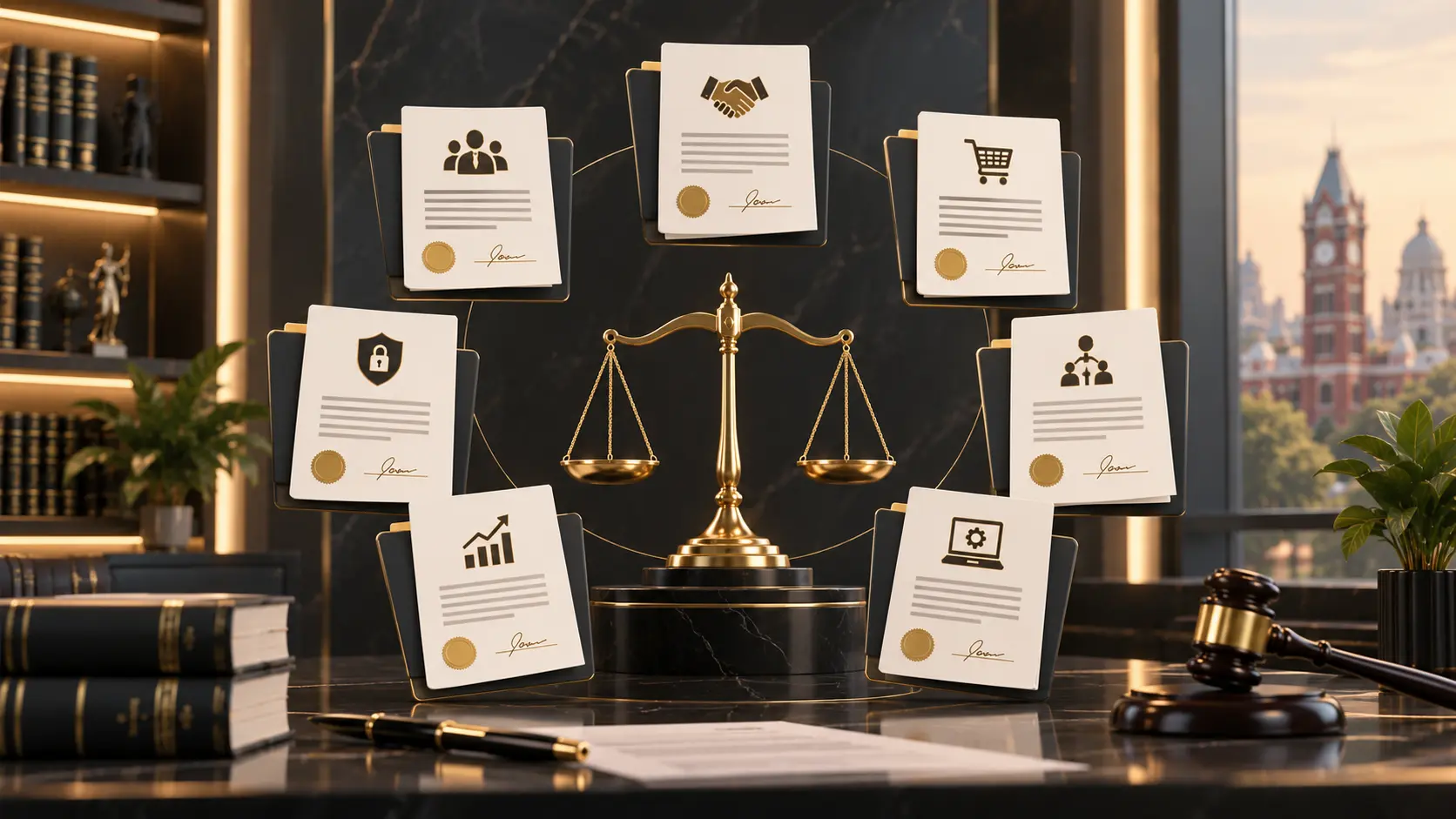
At Legal Prime, agreement drafting begins with understanding the transaction rather than selecting a document from a fixed template.
We consider the nature of the business relationship, the role of each party, the commercial expectations, and the important terms that need to be recorded.
Depending on the matter, our agreement drafting services may cover:
The appropriate document depends on the transaction and the relationship between the parties.
Common Types of Agreements We Handle
Service Agreements
A service agreement defines the relationship between a service provider and its client.
It can cover the scope of work, deliverables, timelines, fees, payment conditions, responsibilities, confidentiality, intellectual property, termination, and dispute related provisions.
For agencies, consultants, technology companies, marketing businesses, maintenance providers, and professional service firms, a clear service agreement can prevent disagreements about what was actually promised.
Vendor and Supplier Agreements
Companies depend on vendors and suppliers for products, materials, technology, logistics, maintenance, and other business requirements.
A vendor agreement can establish delivery expectations, quality requirements, pricing, payment conditions, warranties, replacement obligations, confidentiality, liability, and termination arrangements.
The terms should reflect the actual relationship rather than treating every supplier arrangement in the same way.
Consultancy Agreements
Consultants may have access to business information, clients, intellectual property, systems, and internal processes.
A consultancy agreement can define the scope of the engagement, fees, deliverables, ownership of work, confidentiality, duration, and termination conditions.
This becomes particularly important when the consultant is working on proprietary material or representing the company before customers.
Non Disclosure Agreements
Businesses regularly share information before entering into a larger commercial relationship.
This may include business plans, pricing information, customer information, technical information, designs, financial details, or other confidential material.
A Non Disclosure Agreement establishes the expectations around the use and protection of that information.
Employment Agreements
An employment agreement records the terms of the relationship between the employer and employee.
Depending on the role, it may address compensation, duties, working arrangements, confidentiality, intellectual property, termination, notice requirements, and other applicable conditions.
The agreement should be prepared with the nature of the employment and applicable legal requirements in mind.
Partnership Agreements
When two or more people start a business together, an agreement can clarify how the business will operate.
It may address capital contribution, profit sharing, responsibilities, decision making, admission of new partners, withdrawal, retirement, dispute handling, and other matters.
Clear documentation can become particularly important when the business grows or the interests of the partners change.
Shareholder Agreements
A shareholder agreement can establish understandings between shareholders regarding management, decision making, transfer of shares, investor rights, exit arrangements, and other matters.
For companies with multiple shareholders or external investors, documenting these arrangements can provide greater clarity around future decisions.
Joint Venture Agreements
Joint ventures involve two or more parties working together for a particular business objective.
The agreement may need to address contributions, responsibilities, ownership, management, revenue sharing, intellectual property, confidentiality, duration, exit, and dispute resolution.
Because the parties may bring different resources and expectations into the arrangement, clarity becomes particularly important.
Lease and Property Agreements
Businesses entering into commercial property arrangements may require agreements dealing with rent, security deposit, use of premises, maintenance, repairs, renewal, termination, possession, and other conditions.
The document should reflect the actual property arrangement and the responsibilities accepted by each party.
Technology and Software Agreements
Technology agreements can involve much more than software access.
They may deal with intellectual property, data, confidentiality, system availability, technical support, user rights, payment, security obligations, service levels, and termination.
For software companies and businesses dependent on technology platforms, these provisions can have significant commercial importance.
What Should a Good Agreement Contain?
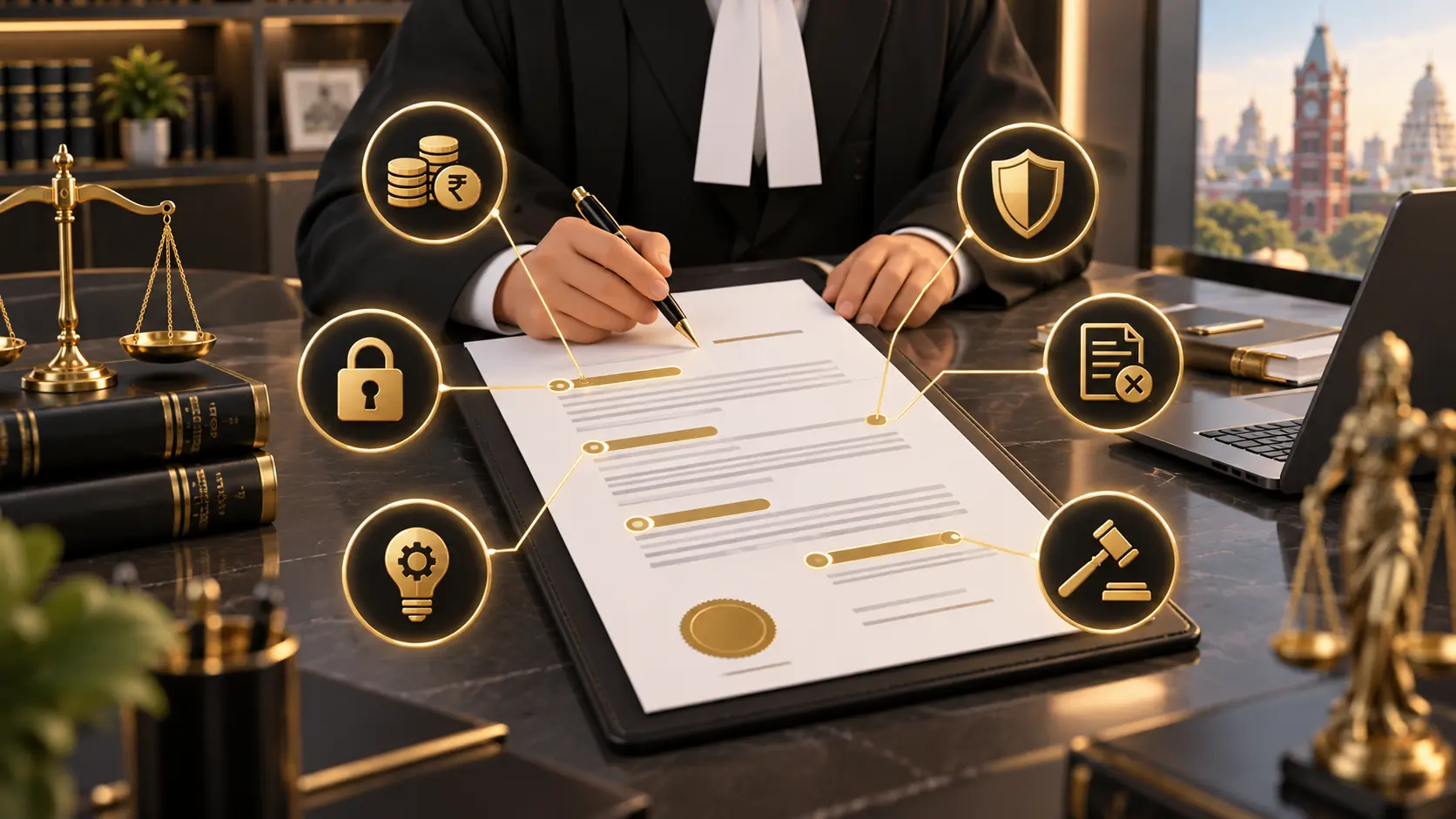
There is no single list that applies to every agreement.
However, most commercial agreements need clear treatment of several basic areas.
| Agreement Area | What It Usually Covers |
|---|---|
| Parties | Legal identity of the people or entities entering the agreement |
| Purpose | Reason for entering into the arrangement |
| Scope | Services, work, products, or responsibilities involved |
| Payment | Fees, invoices, payment dates, and applicable conditions |
| Duration | Start date, term, renewal, or expiry |
| Responsibilities | Obligations of each party |
| Confidentiality | Protection and permitted use of confidential information |
| Intellectual Property | Ownership and usage rights |
| Representations | Important statements or assurances made by the parties |
| Liability | Responsibility for specified losses or claims |
| Termination | Circumstances and procedure for ending the agreement |
| Dispute Resolution | Method for dealing with disagreements |
| Governing Law | Legal framework applicable to the agreement |
Agreement Drafting Is More Than Filling in a Template
A template can be useful as a starting point.
But an agreement becomes meaningful only when its terms reflect the actual relationship between the parties.
Imagine a company hires an agency to develop its website.
A basic template may mention “development services.”
But several practical questions remain.
These questions are part of the commercial reality of the transaction. Good agreement drafting brings that reality into the document.
Agreement Review and Revision

Businesses do not always approach us before an agreement is prepared.
Sometimes another party sends the contract.
A company may receive an agreement from a customer, vendor, landlord, technology provider, investor, or business partner and want to understand what it is accepting before signing.
In such situations, agreement review can help identify provisions that require clarification or negotiation.
The review may focus on:
The objective is to help the business understand the document before committing to it.
Negotiating an Agreement
Drafting is only one part of reaching a final agreement.
The other party may suggest changes to the original document.
Some changes may be routine. Others may materially affect the business.
For example, a customer may request unlimited liability from a service provider. A vendor may request advance payment. A technology company may seek ownership of work created during a project. A landlord may propose restrictive termination conditions.
These changes need to be considered in the context of the transaction.
Legal agreement support can therefore include reviewing proposed changes, explaining their implications, and helping the client prepare a commercially appropriate response.
What Happens When an Agreement Is Broken?
A contract cannot prevent every breach.
A party may fail to deliver services, delay payment, misuse confidential information, supply defective products, or fail to meet another contractual obligation.
The agreement becomes an important reference point in determining what the parties originally agreed.
Depending on the terms, the available response may include notice, correction of the breach, payment recovery, termination, damages, negotiation, arbitration, mediation, or court proceedings.
The actual remedy depends on the agreement, applicable law, and circumstances of the matter.
This is another reason why important obligations should be drafted clearly from the beginning.
Agreement Drafting for Startups

Startups often enter agreements quickly because they are focused on launching the business and building customers.
Early agreements may include founder arrangements, employment documents, vendor contracts, client agreements, technology licences, investor documentation, and confidentiality agreements.
As the business grows, informal arrangements that worked initially may become difficult to manage.
A startup does not need an unnecessarily complicated contract for every activity. It needs appropriate documentation for the relationships that carry meaningful financial, legal, or operational consequences.
Agreement Drafting for Established Companies
Established businesses may deal with a much larger volume of contracts.
Their requirements can include standard customer agreements, supplier arrangements, employee documentation, technology contracts, licensing arrangements, distribution agreements, and strategic partnerships.
For these businesses, consistency becomes important.
A legal team may maintain standard agreement structures while modifying important terms depending on the transaction.
This allows the company to maintain a consistent contractual position without treating every business relationship as identical.
Agreements for International Business

Companies working with overseas customers, vendors, consultants, investors, or business partners may need agreements that account for cross border transactions.
The document may raise questions about applicable law, jurisdiction, currency, payment, intellectual property, confidentiality, data, dispute resolution, and enforcement.
International agreements should therefore be reviewed according to the nature of the transaction and the jurisdictions involved.
Agreements and Business Protection
An agreement is not valuable simply because it contains many pages.
A shorter document that clearly records the important commercial terms can be more useful than a lengthy document containing provisions that do not relate to the actual relationship.
The real objective is clarity.
The parties should know what they have agreed to do, what they are entitled to receive, what happens when circumstances change, and what options are available if the relationship does not work as expected.
Agreement Drafting Process at Legal Prime

Understanding the Requirement
We first understand the transaction and the reason the parties are entering into the agreement.
Collecting Relevant Information
The necessary commercial terms, party details, existing documents, proposals, correspondence, and other relevant information are considered.
Structuring the Agreement
The agreement is organised according to the nature of the transaction.
Drafting the Terms
The relevant obligations, rights, conditions, protections, and procedures are incorporated into the document.
Legal Review
The draft is reviewed for consistency, clarity, applicable legal requirements, and important contractual provisions.
Revision and Negotiation Support
Where required, changes proposed by the other party can be reviewed and incorporated after discussion with the client.
Finalisation
The final document is prepared for execution after the parties have agreed on the applicable terms.
Agreement Drafting vs Agreement Review
These services are related but serve different purposes.
| Agreement Drafting | Agreement Review |
|---|---|
| Creates the agreement | Examines an existing agreement |
| Starts from the client’s transaction | Starts from a document already prepared |
| Structures the commercial arrangement | Identifies important provisions and concerns |
| Converts business terms into contractual language | Helps the client understand what they are accepting |
| Can include negotiation preparation | Can include revision and negotiation support |
Questions Businesses Commonly Ask About Agreements
Why does a business need a written agreement?
Can Legal Prime draft agreements for companies?
Can an agreement be changed after signing?
Can I use a standard agreement template?
What is the difference between an agreement and a contract?
What happens if one party does not follow the agreement?
Can agreements be signed electronically?
Should agreements mention dispute resolution?
Can an agreement protect intellectual property?
Can a lawyer review an agreement before signing?
How long does agreement drafting take?
Can Legal Prime help with agreement negotiation?
Why Businesses Choose Legal Prime for Agreement Services

The purpose of an agreement is not simply to make a business relationship look formal.
It should accurately record what the parties actually intend to do.
At Legal Prime, we approach agreement drafting by first understanding the transaction and then preparing the document around the relevant commercial terms.
Our agreement services are suitable for companies, startups, professionals, organisations, and businesses that need assistance with preparing, reviewing, revising, or negotiating legal agreements.
Whether the requirement involves a simple consultancy arrangement or a more detailed commercial relationship, the document should be clear enough for the parties to understand and carefully structured enough to support the relationship.
Legal Agreement Services in Chennai
Businesses enter agreements every day.
Some involve a small service engagement. Others involve years of commercial obligations, valuable intellectual property, substantial payments, or important business relationships.
The importance of legal drafting should therefore be considered in proportion to the transaction.
Legal Prime provides agreement drafting and review services in Chennai for businesses that want their commercial arrangements properly documented.
From service agreements and vendor contracts to technology arrangements, employment documents, partnership agreements, property agreements, and other commercial documentation, our focus is on preparing agreements that reflect the actual understanding between the parties.